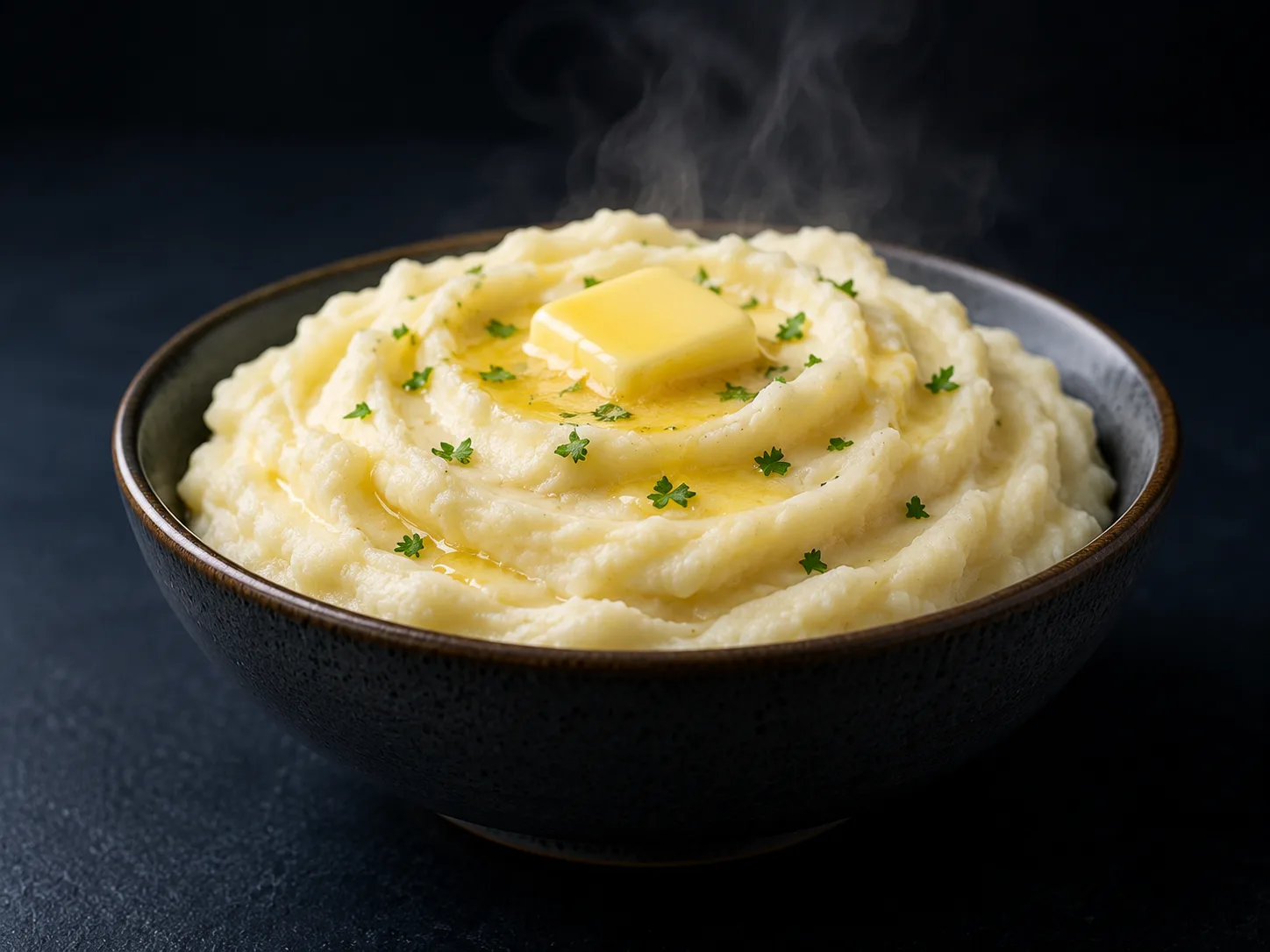
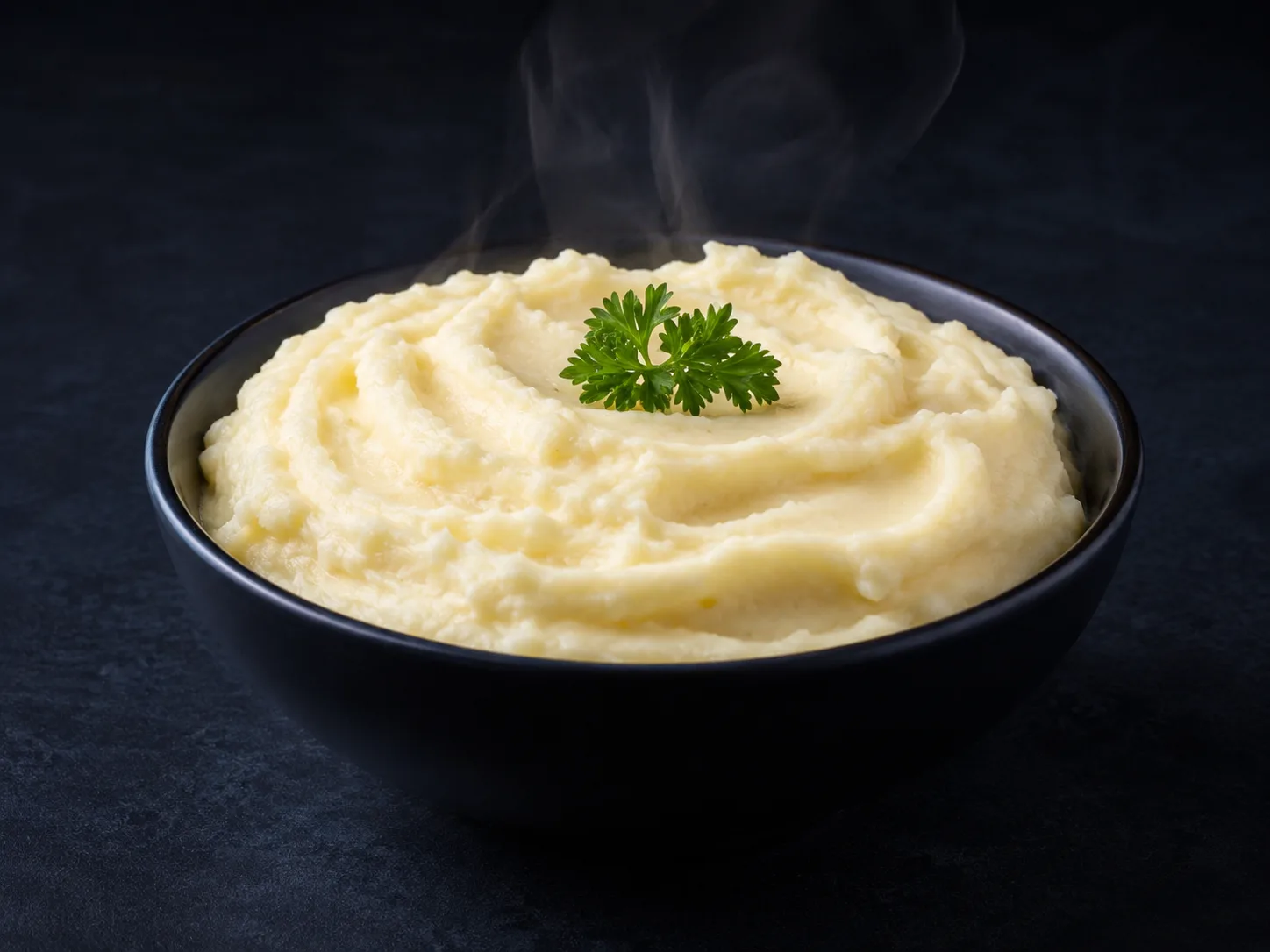
Rehydration parameters, formula notes and texture control for instant mashed potato made from flakes and granules — for retail packs and industrial kitchens.
The same flake or granule base serves both lines; packaging, specification depth and rehydration instructions differ. Dehydrated mashed potato can be quickly rehydrated with water alone, so the product design decides the water ratio, temperature and holding window.
Retail · Ready to eat
Small-pack instant mash for consumers
Single-serve sachets and family packs reconstituted with hot water in minutes. Shelf stability, clean flavour and simple instructions decide the specification.
Sachet and family formats
Strict SO₂ and microbiology limits for export
Mild, clean potato flavour
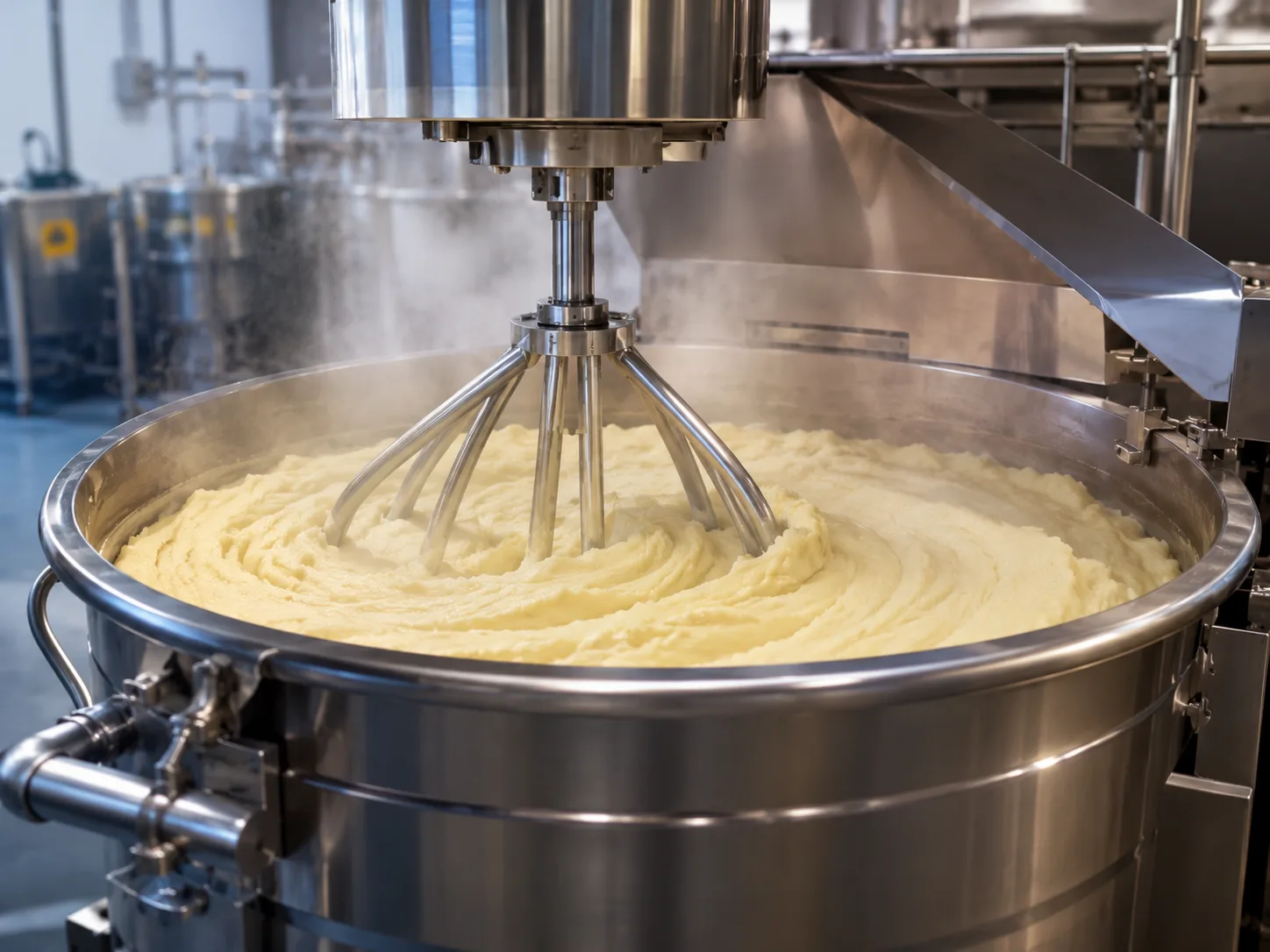
Industrial · Foodservice & prepared
Bulk flakes for kitchens, canteens and ready meals
Large packaging for caterers, commissaries and ready-meal lines where rehydration speed, yield and texture hold-up on the line matter.
Bulk packaging from 25 kg+
Fast, repeatable hydration on the line
Texture stability under hold and reheat
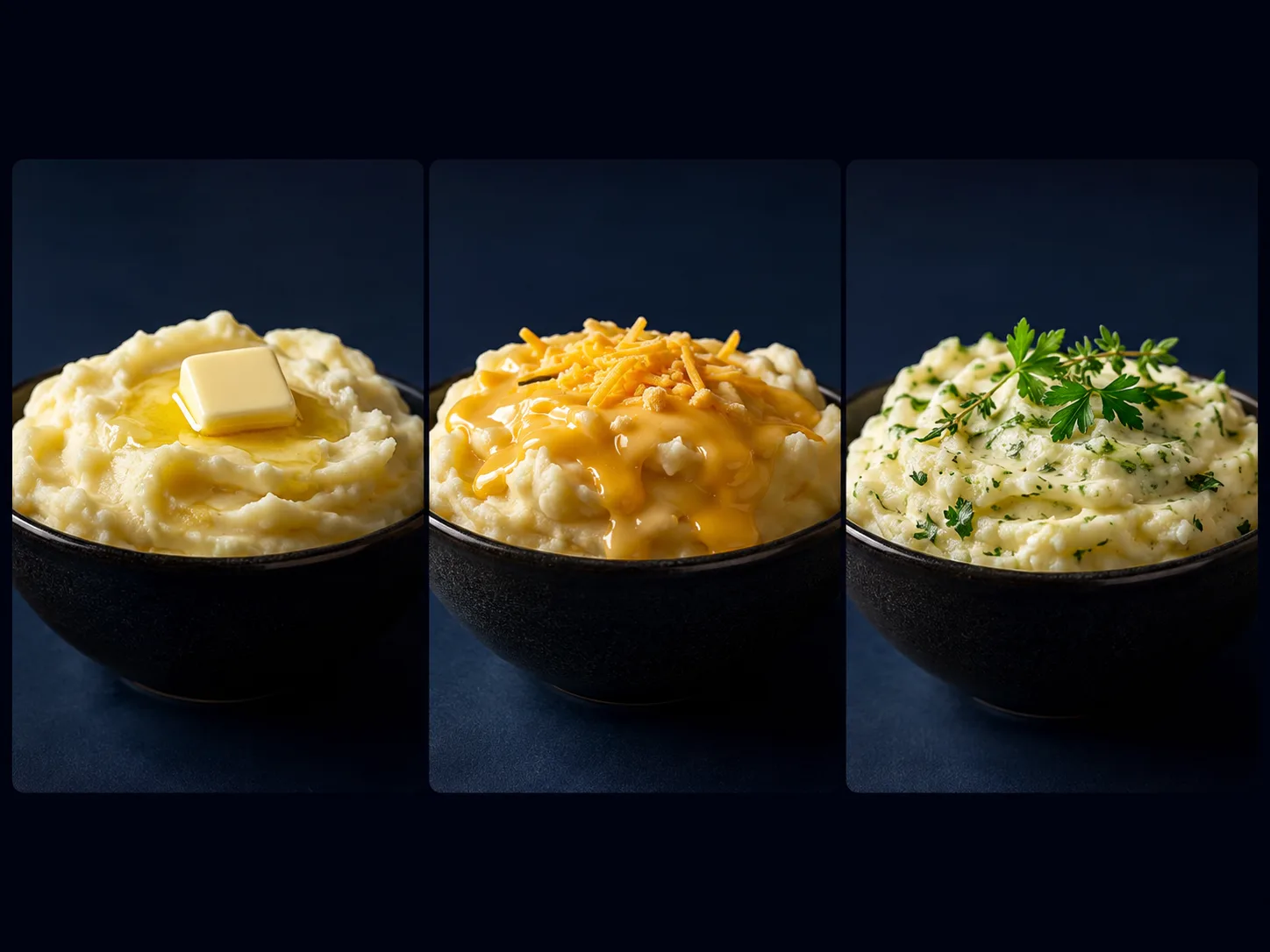
Flavoured line
Seasoned mash bases on the same ingredient
Cheese, herb and garlic mash directions built on the same flake or granule base. Seasoning blends can carry their own SO₂ or allergen load — verify every ingredient.
Cheese / herb / garlic directions
Verify SO₂ and allergens from seasonings
Flavour balanced against the potato base
Rehydration parameters
Four dials that decide the mash
Card values below are illustrative industry-practice estimates. Confirm them against your target product and supplier trials — water source, equipment and desired texture all shift the numbers.
011 : 4–5
Water ratio
One part flakes to 4–5 parts hot water by weight (illustrative). Granules may take slightly less; the final ratio follows the target texture.
0280–100°C
Water temperature
Hot water in this band hydrates the cooked, dried cells quickly; lower temperatures slow hydration and can leave hard centres. Illustrative.
031–3 min
Rest time
Standing time lets water penetrate the flake structure. Stir early, rest, then finish. Illustrative.
04Gentle fold, minimal mixing
Stirring method
Over-stirring breaks cell walls and releases free starch, making the mash sticky and pasty. Use a gentle fold; industrial lines should avoid high shear.
⚠ Illustrative industry-practice estimate — verify with target-product sensory goals and supplier-scale trials before scale-up.
Texture control
Why mash turns sticky, and how to stop it
A smooth, non-pasty mash depends on intact potato cells. When they break, free starch makes the product gluey.
01
Over-shear during mixing
High-speed blades and long mixing break cell walls. Reduce speed, use a paddle or a fold, and stop as soon as the mash is uniform.
02
Cell damage in processing
Cooking and mashing conditions during flake production set the cell-damage baseline; rehydration cannot repair it. Choose a grade whose specification and trial match your texture target.
03
Free starch from over-resting
Leaving rehydrated mash warm for too long lets starch continue to swell, increasing pastiness. Serve or hold within the validated window.
04
Flake size & form selection
Larger flakes suit rustic, fluffy mash; finer flakes and granules give a smoother, more uniform result. Granules reconstitute finer and are preferred for smooth-texture formulas.
Specification fields
The fields that matter for instant mash
Reference limits below follow USDA A-A-20032H for dehydrated potato and its instant-mash product class; EU 1333/2008 governs SO₂ for retail export. Contractual values are fixed in the signed specification and verified by the lot COA.
Field
Reference value
Basis / note
Moisture
Flakes ≤ 9.0% · instant mash ≤ 9.5%
USDA A-A-20032H — supports shelf life and texture
Reducing sugars
≤ 4.0% (flakes)
USDA A-A-20032H — relevant to browning and flavour
US5292542 describes rapid rehydration of dehydrated mashed potato; verify ratio and time in your process
Published figures are authoritative references, not contractual guarantees. The signed specification and lot COA govern the purchase.
Application FAQ
Common questions from mash R&D and procurement
01The rehydrated mash is sticky — what should I check?+
Work through the four dials in order: rehydration ratio (less water stiffens, but too little leaves hard bits), water temperature, rest time and mixing shear. Over-stirring breaks potato cells and releases free starch, the most common cause of a pasty instant mashed potato; hold the ratio near the illustrative 1:4–1:5 by weight, use water at about 80–100°C, rest 1–3 minutes and finish with a gentle fold instead of high shear. For a smooth texture with no lumps, check the lot COA fields first — flakes moisture ≤ 9.0% and reducing sugars ≤ 4.0% per USDA A-A-20032H — because spec drift in the potato flakes for mash changes hydration before you start. Before scale-up, compare potato-flake and granule samples against your target texture, then confirm MOQ, bulk density and the agreed specification in the quotation.
02Does the water have to be boiling?+
Not necessarily — the illustrative water temperature band for instant mashed potato is about 80–100°C. Hot water hydrates the cooked, dried cells quickly, while colder water slows rehydration and can leave a grainy or hard centre in potato flakes for mash. Confirm the temperature against your target product and supplier trials, and remember that water temperature works together with the rehydration ratio: at 1:4–1:5 by weight the mash absorbs evenly, so set both dials together. Ask for the COA when buying bulk potato flakes so moisture and SO₂ values match your line.
03What differs between retail and industrial flake specifications?+
Same base technology, different emphasis. Retail packs stress SO₂ and microbiology limits (EU 1333/2008 applies 400 mg/kg for dehydrated potato), flavour stability and simple instructions; industrial supply stresses rehydration speed, yield, bulk packaging, bulk density consistency and texture hold under hold-and-reheat. USDA A-A-20032H caps flakes moisture at ≤ 9.0%, reducing sugars at ≤ 4.0% and SO₂ at ≤ 500 mg/kg, while instant mash runs ≤ 9.5% moisture and ≤ 600 mg/kg SO₂ with yeast & mould < 100 CFU/g — confirm the same limits in the signed specification and lot COA. For bulk potato flakes or granules, state the target texture and acceptable level of lumps in the inquiry so the MOQ and document set can be matched to the application.
04How do I validate a new batch or supplier?+
Run a fixed protocol: same rehydration ratio (illustrative 1:4–1:5 by weight), water temperature (80–100°C), mixing method and rest time (1–3 minutes); measure texture/mouthfeel, colour, lumps and yield against the reference batch. Compare the COA fields — moisture ≤ 9.0% for flakes and ≤ 9.5% for instant mash, reducing sugars ≤ 4.0%, SO₂ ≤ 500/600 mg/kg, yeast & mould < 100 CFU/g per USDA A-A-20032H — so any spec drift explains the sensory result. One batch is a signal; three lots confirm consistency, and that is when MOQ, bulk density and delivery terms get locked with the supplier.
05How do I confirm SO₂ compliance for export?+
Compare the lot COA value against the destination rule: EU 1333/2008 limits dehydrated potato products to 400 mg/kg (expressed as SO₂); other markets follow Codex or national limits (e.g. GB 2760 in China). USDA A-A-20032H allows up to 500 mg/kg in flakes and 600 mg/kg in instant mash, so the binding limit is usually the destination regulation rather than the reference spec. Ask the supplier to state the SO₂ basis and provide a lot certificate before booking, and keep the COA with the shipment file — for bulk potato flakes and potato granules for instant mash, the SO₂ result is one line of a document set that also records bulk density, moisture and the agreed MOQ terms.
06How to prevent gummy instant mashed potato?+
Gummy, gluey instant mashed potato is almost always caused by over-shear or by a wrong water balance, not by the ingredient itself. Keep the mixing gentle — use a fold or a low-speed paddle, stop as soon as the mash is uniform, and avoid free starch building up from long warm holding; too much water also thins and pastes the product, so hold the rehydration ratio near the illustrative 1:4–1:5 by weight at 80–100°C with a 1–3 minute rest. Choose potato flakes for mash or potato granules for instant mash whose grade matches your target smooth texture, and verify the spec fields (flake moisture ≤ 9.0%, reducing sugars ≤ 4.0% per USDA A-A-20032H) on the lot COA. Grade screening should include bulk density, rehydration behaviour and lump formation before the ingredient reaches production scale.
07What water ratio for bulk potato flakes mash?+
For bulk potato flakes mash, the industry-practice rehydration ratio is about 1 part flakes to 4–5 parts hot water by weight (illustrative; granules may take slightly less). Pair the ratio with a water temperature of about 80–100°C and a rest of 1–3 minutes, because ratio, temperature and time act as one system — too little water leaves hard centres and lumps, too much gives a thin, pasty smooth texture. When quoting bulk potato flakes, confirm bulk density, MOQ and COA coverage (moisture ≤ 9.0%, reducing sugars ≤ 4.0%, SO₂ ≤ 500 mg/kg per USDA A-A-20032H) so your line stays repeatable. Request trial quantities of potato flakes and granules sized to your batch and compare them under the same hydration conditions.
Application review: Potato Granules and Flakes for Instant Mashed Potato Production
Application pages are most useful when the ingredient is evaluated under your real water ratio, mixing sequence, temperature, shear and holding time. Compare forms by the result they produce in the finished food, not by name alone.
Record texture, hydration or viscosity, colour, yield and processing stability during the trial. Use those results to select a grade and define the specification fields that matter to your line.
01
Process conditions
Define water addition, mixing, heat, shear and downstream process.
potato granules for instant mashed potato
potato granules
potato flakes
instant food potato ingredient
02
Trial performance
Measure the finished-product results that matter to the application.
potato flour for foodservice
potato flakes rehydration
water absorption performance
natural potato flavor
03
Grade confirmation
Select the form and specification after a controlled side-by-side trial.
potato flour for dry mixes
bulk supply planning
sample evaluation
batch COA
Application trial checklist
Water ratioMixing / shearTemperatureTexture / viscosityColour / yieldRepeatability