Request Quote ↗
Potato ingredient sample evaluation – laboratory and trial comparison

Sample Evaluation Guide · Procurement Methodology

Evaluate Supplier Samples
Scientifically

A standardized protocol to compare candidate samples side by side, record measurable evidence, and approve bulk batches on facts — not impressions.

Sample request strategy

The decision quality starts with the sample you request

The quality of a sample decision depends on the samples requested: two candidate grades, enough quantity for replication, and the right accompanying documents.

01

Why request two candidate grades

A single sample shows what one lot can do; two candidates tested under identical conditions show what the difference means for your process. Test both with the same water ratio, water temperature, stirring speed and resting time, then compare hydration, clumping, mouthfeel, colour and yield.

02

Sample quantity (illustrative)

Order enough for at least two complete trials plus a retained reference portion — e.g. 2–5 kg per candidate for flake/powder lines, or 5–10 kg when a pilot run is planned (illustrative values; confirm with the supplier).

03

Accompanying documents to request

Ask for the product specification sheet and a sample-lot Certificate of Analysis (COA) covering moisture, reducing sugars, SO₂, microbiology and particle profile. Keep the sample COA to compare against bulk-lot COAs later.

Standardized 5-step protocol

One protocol, comparable results

Run both candidates through the same five steps. Change one variable at a time and record everything; never compare a rushed test to a careful one.

01

Step 1 · Preparation

Record the sample identity before opening: supplier, grade, batch or lot number, package condition, arrival date and declared COA values. Prepare the same water source, equipment and measuring tools for both samples.

  • Supplier & grade
  • Batch / lot number
  • Declared COA values
02

Step 2 · Rehydration / sample preparation

Rehydrate both candidates with the same water ratio, water temperature, stirring speed and resting time; use the same vessel, mixer and timing, and note any deviation immediately.

  • Water ratio
  • Water temperature
  • Stirring speed & time
  • Resting time
03

Step 3 · Observation & recording

Record hydration behaviour, lumps or clumping, colour and black specks, texture formation and final yield at set intervals. Photos and a written log beat memory.

  • Hydration behaviour
  • Clumping / lumps
  • Colour & specks
  • Texture formation
  • Yield
04

Step 4 · Sensory evaluation

Evaluate with the same panel and the same scoring sheet: appearance, aroma, mouthfeel and taste. Blind coding (A/B) removes supplier bias.

  • Blind code A/B
  • Appearance & aroma
  • Mouthfeel & taste
  • Scoring sheet
05

Step 5 · Laboratory cross-check

Compare results against the signed specification and reference limits: USDA A-A-20032H gives flakes moisture ≤ 9.0%, reducing sugars ≤ 4.0%, SO₂ ≤ 500 mg/kg, APC < 100,000 CFU/g and Salmonella negative; granules/instant mash moisture ≤ 9.5%, SO₂ ≤ 600 mg/kg, yeast & mould < 100 CFU/g. EU 1333/2008 caps SO₂ in dehydrated potatoes at 400 mg/kg as SO₂. Bulk lots are accepted on their COA, not on the sample.

  • Reference limits
  • Lot COA values
  • Signed specification
ParameterFlakes — USDA A-A-20032HGranules / instant mash — USDA A-A-20032H
Moisture≤ 9.0%≤ 9.5%
Reducing sugars≤ 4.0%Per signed specification
Sulphite (SO₂)≤ 500 mg/kg≤ 600 mg/kg
Aerobic plate count (APC)< 100,000 CFU/gPer signed specification
SalmonellaNegativePer signed specification
Yeast & mouldPer signed specification< 100 CFU/g

EU 1333/2008 sets a maximum of 400 mg/kg SO₂ (as SO₂) for dehydrated potatoes placed on the EU market — stricter than the USDA reference for flakes. Published values are authoritative references; contractual limits are fixed in the signed specification.

Record sheet

Fields every trial log should carry

A complete record turns a sample trial into a repeatable evidence file. Use the same fields for both candidates so the comparison is fair.

01

Water ratio

Weight of water per weight of powder (e.g. 3:1), identical for both samples.

02

Water temperature

Initial water temperature and how it changes during resting.

03

Time

Stirring time, resting time and observation intervals — recorded per sample.

04

Stirring

Mixer type, speed setting and method of addition (gradual vs all-at-once).

05

Clumping

Presence, size and persistence of lumps after hydration.

06

Colour

L* value or visual scale, plus black-specks count per unit weight.

07

Mouthfeel

Smoothness, graininess, pastiness — scored on the same 5-point sheet.

08

Yield

Final usable weight or volume after preparation; losses from lumps or sticking.

09

Batch number

Sample-lot reference linked to the COA; later compared with bulk-lot COAs.

Representativeness: a sample represents the specific batch it was drawn from. Sampling follows representativeness principles (Codex CXG 50-2004 general sampling guidance background); acceptance of bulk goods is governed by the lot COA and port-arrival re-inspection, not by the sample alone.

Scale-up & batch approval

From small trial to bulk approval

Passing the sample is the first step, not the last. Scale in stages and verify each stage against documents.

01

Small-scale trial (laboratory)

Confirm hydration, texture, colour and yield under controlled conditions; freeze the protocol and the record sheet.

02

Pilot run (production line)

Run the candidate at pilot or first-production scale on your line; verify dosing, mixing behaviour and finished-product consistency.

03

First production article

Inspect the first article of the actual order: packaging, label, lot marking and the first-lot COA.

04

Batch COA verification

Every bulk lot is accepted against its own COA and arrival re-inspection results; the sample is a reference, the lot COA is the acceptance document.

Sample evaluation FAQ

Common questions

01Will the sample and bulk lots be exactly identical?+

A sample represents only the specific batch it was drawn from, so treat your potato flakes sample as a capability reference rather than a promise for every future lot. Production lots vary within the agreed specification, and bulk lots are verified by each lot’s batch COA plus port-arrival re-inspection. For a reliable sample evaluation, request the sample-lot COA, keep it on file, and compare it with the bulk-lot COA when the order arrives; run the same lab test on both and investigate any parameter that moves before production. USDA A-A-20032H is a useful baseline (flakes moisture ≤ 9.0%, reducing sugars ≤ 4.0%, SO₂ ≤ 500 mg/kg), while EU 1333/2008 caps SO₂ in dehydrated potatoes at 400 mg/kg for EU-bound goods. Never let sample data replace lot-COA acceptance.

02How many potato flakes samples should I request?+

For a meaningful sample evaluation, request at least two candidate grades and enough of each for two complete trials plus a retained reference portion — for example 2–5 kg per candidate for flake or powder lines, or 5–10 kg when a pilot run is planned (illustrative; confirm with the supplier). These are usually provided as free samples, but the supplier may ask you to cover courier costs; clarify this before ordering. Ask for the sample-lot batch COA and specification sheet with each delivery so your potato ingredient trial has a documented baseline. A single small sachet is enough for a visual check only — it cannot support a rehydration test, a sensory evaluation or a scale-up decision.

03How to compare two potato granule suppliers’ samples?+

Run the two candidates through exactly the same protocol so the supplier comparison is fair: same water ratio, water temperature, stirring speed and resting time, then record hydration behaviour, clumping, mouthfeel, colour and yield on the same scoring sheet. Use blind codes (A/B) so the sensory evaluation is free of brand bias, and photograph each stage for the record. Cross-check both against the signed specification and reference limits such as USDA A-A-20032H (granules moisture ≤ 9.5%, SO₂ ≤ 600 mg/kg) or EU 1333/2008 (400 mg/kg SO₂ for the EU market). Finish the potato ingredient trial by comparing the two batch COAs and, if volumes justify it, a third party inspection report. The supplier whose sample passes your process conditions — not the one with the best marketing — wins the order.

04What is a rehydration test and how do I run one on a potato flakes sample?+

A rehydration test reproduces your preparation conditions in the lab: weigh the powder, add water at your usual water ratio and water temperature, stir at a fixed speed for a fixed time, rest for a fixed time, then record hydration behaviour, clumping, mouthfeel, colour and yield at set intervals. Run the identical steps on every candidate sample so results are comparable, and note any deviation immediately. Pair the test with the lab test results on moisture and reducing sugars from the batch COA — USDA A-A-20032H guides flakes at moisture ≤ 9.0% and reducing sugars ≤ 4.0%. A standardised rehydration test turns a potato ingredient trial into data you can defend to management and regulators.

05How do I avoid testing only surface samples?+

Sample representativeness follows general sampling principles (Codex CXG 50-2004): take multiple increments from different positions and depths, combine and reduce them correctly, and label the composite with the lot number. Never accept a single surface scoop as proof of the lot — the surface is the most exposed to moisture, light and handling. Take increments across the bag, the pallet and the shipment, and if you receive pre-taken samples, ask the supplier for the sampling record. Keep the composite sealed and identified, and link it to the batch COA so your sample evaluation reflects the actual lot. When in doubt about the procedure, reference CXG 50-2004 or ask the supplier to resample under your supervision.

06Do I need third-party testing?+

Not always — start with the supplier’s batch COA and your own lab test results; many routine parameters can be verified in-house. Third party inspection is recommended for high-volume or high-risk purchases, for SO₂ limits in regulated markets (EU 1333/2008 sets 400 mg/kg for dehydrated potatoes), and to settle disputes between buyer and supplier. Accredited laboratories give results that both parties can rely on in a claim, so agree the laboratory and method in the contract beforehand. Keep the report together with the sample-lot COA and your rehydration test records; this complete file supports any future sample evaluation or lot acceptance decision. Budget for third-party testing once per season or per supplier rather than on every container.

07How long is a sample valid?+

Dehydrated potato products are shelf-stable when sealed and stored cool and dry (illustrative guidance; confirm with the supplier and the printed shelf life). A sample evaluated near the end of its life may not reflect fresh production, because moisture uptake and sugar reactions slowly change hydration and colour. Check the packaging date and the batch COA date before you run your rehydration test or lab test, and record the storage conditions of the retained sample. If more than a few months pass between sampling and your potato ingredient trial, ask the supplier for a fresh free sample rather than testing an aged one. For best comparability, run your sample evaluation within a reasonable window and always against the lot it was drawn from.

08How do I retain reference samples?+

Keep a sealed portion of each accepted sample in a dry, cool, light-protected archive with the lot number and the batch COA attached, and retain it for at least one full order cycle or the agreed claim period. Record who sampled, when, from which lot, and the storage conditions, so the reference is traceable. If a bulk lot is disputed later, the retained sample and its batch COA are the evidence base for a third party inspection; without them, a claim is hard to defend. Follow representative sampling practice (Codex CXG 50-2004) when you divide the sample, so the retained portion truly represents the lot. Rotate archives per season and dispose of expired references only after the claim window closes.

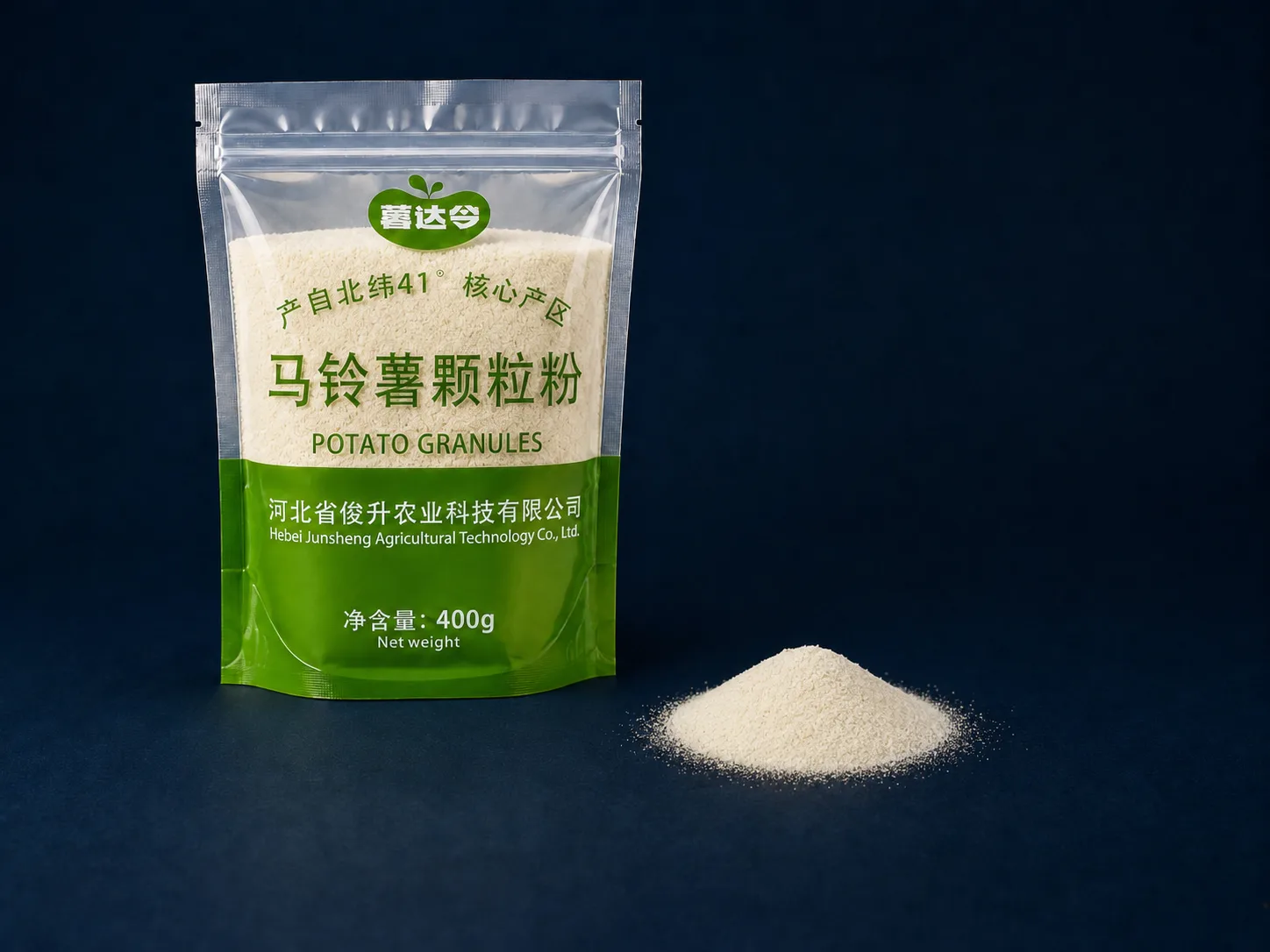
Authoritative references

Data sources for this page

Planning a side-by-side sample trial?

Request two candidate grades with sample-lot COA and specification documents — we support application testing and scale-up.

Request evaluation samples →

Start a sample evaluation inquiry

Share your product, water ratio, target texture and trial volume — we prepare comparable samples with documents.

PROCUREMENT REVIEW · SAMPLE, DOCUMENTS & DELIVERY

Purchase planning: Potato Flour Sample Evaluation Before Bulk Purchase

A complete sourcing review connects technical approval with the documents and logistics needed for the destination market. Begin with the intended application and trial requirement, then confirm the commercial order basis.

Request the current TDS, representative COA, packing format, MOQ, lead time and trade term. Final acceptance criteria belong in the agreed specification and should be verified against the supplied lot.

01

Sample & technical approval

Define what needs to be tested before a commercial commitment.

  • potato flour sample evaluation
  • sample evaluation
  • potato flakes rehydration
  • water absorption performance
02

Documents & compliance

Confirm the quality and destination documents needed for supplier approval.

  • particle size and mesh
  • potato flour color control
  • natural potato flavor
  • low reducing sugar potato flakes
03

Order & delivery

Align MOQ, packing, lead time, port and quotation basis.

  • microbiological specification
  • batch COA
  • technical data sheet (TDS)
  • potato flour quality control
Purchase file checklist
Sample planTDSCOAPackingMOQ / lead timeFOB / CIF