
Factory Direct
Manufacturer-direct supply and technical coordination
Whole Potato Granules · Industrial Grade
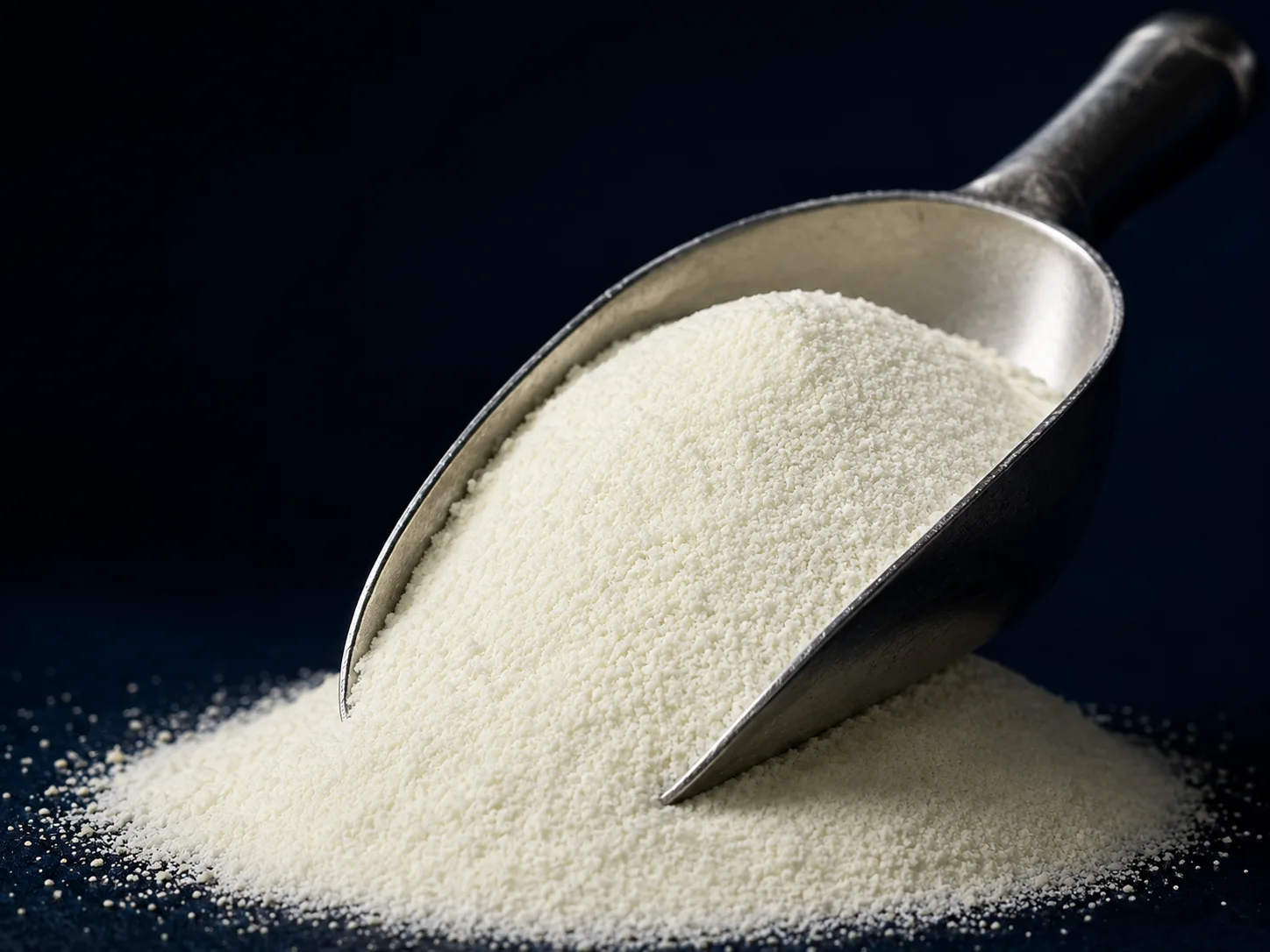
Free-flowing dehydrated potato granules for fine, uniform reconstitution, precise dosing and stable texture in industrial food production.
Designed for instant mashed potato producers, bakery plants, formed snack lines, dry-mix systems, prepared-food manufacturers and ingredient distributors.
 100% FACTORY DIRECT
Manufacturer-direct supply and technical coordination
Even reconstituted mouthfeel for precise products
Doses accurately in dry blending and dosing lines
Add-back drying limits free starch and pastiness
Lot-controlled production output
Module 02 — TDS Summary
Whole potato granules are produced by the add-back drying route that keeps most potato cells intact, which supports a finer, more uniform reconstituted texture than flake forms. Reference values below follow the USDA A-A-20032H basis for dehydrated white potatoes.
| Parameter | Specification | Performance Note |
|---|---|---|
| Product Type | Whole Potato Granules | Dehydrated potato granules from cooked, mashed and add-back dried potato |
| Moisture Content | Typically ≤ 9.5% | USDA A-A-20032H reference basis; supports shelf stability |
| Reducing Sugar | Typically ≤ 4.0% | USDA A-A-20032H reference basis; relevant where fry or bake colour matters |
| Sulphite as SO₂ | ≤ 600 mg/kg reference | Destination rules apply (EU 400 mg/kg max for dehydrated potato products) |
| Microbial Profile | Yeast & mould <100 CFU/g reference | Food-grade standard; batch COA available for each shipment |
| Particle Form | Free-flowing granules | Accurate dosing, low dust in dry blending |
| Rehydration | Fine, uniform texture | Smoother reconstituted mouthfeel than flake forms |
Specifications can be adjusted according to your application, including instant mashed potato, bakery systems, formed snacks, dry mixes, prepared foods and OEM formulations.
Module 03 — Process Control
Whole potato granules are not simply ground flakes. Cooked potato is riced and mashed, mixed back with dry granules, conditioned to limit cell rupture, dried and sieved. The result is a free-flowing granule with low free starch and a fine, uniform reconstituted texture.
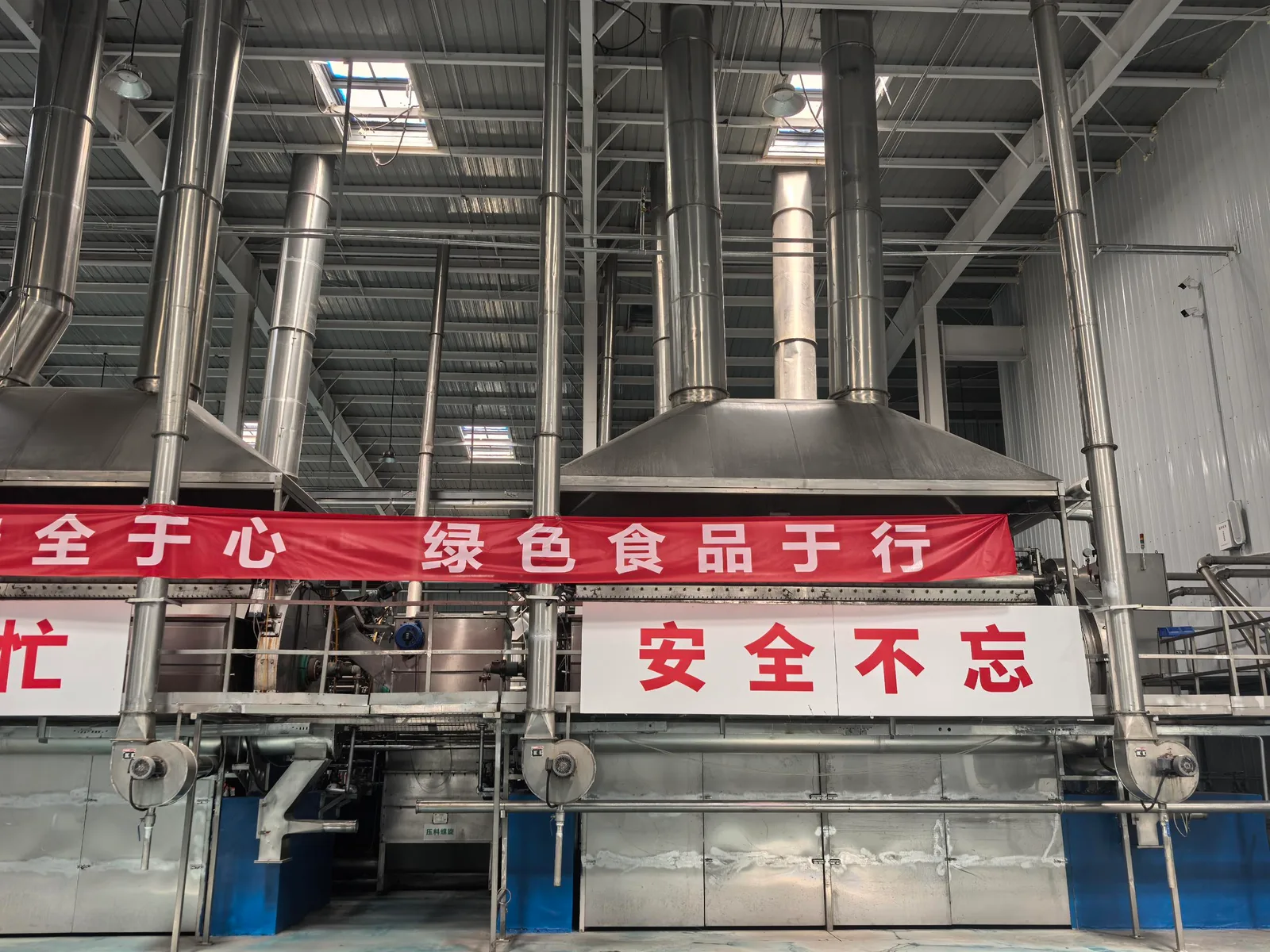
Potatoes are cooked and riced to separate cells with minimal mechanical damage, protecting texture and limiting the release of free starch.
Cooked mash is mixed back with dry granules and conditioned so moisture redistributes without crushing cells — the step that defines the fine uniform granule character.
Drying stabilises the granule, and sieving sets the particle distribution that controls bulk density, flow, dosing and reconstitution behaviour.
Module 04 — Industrial Applications
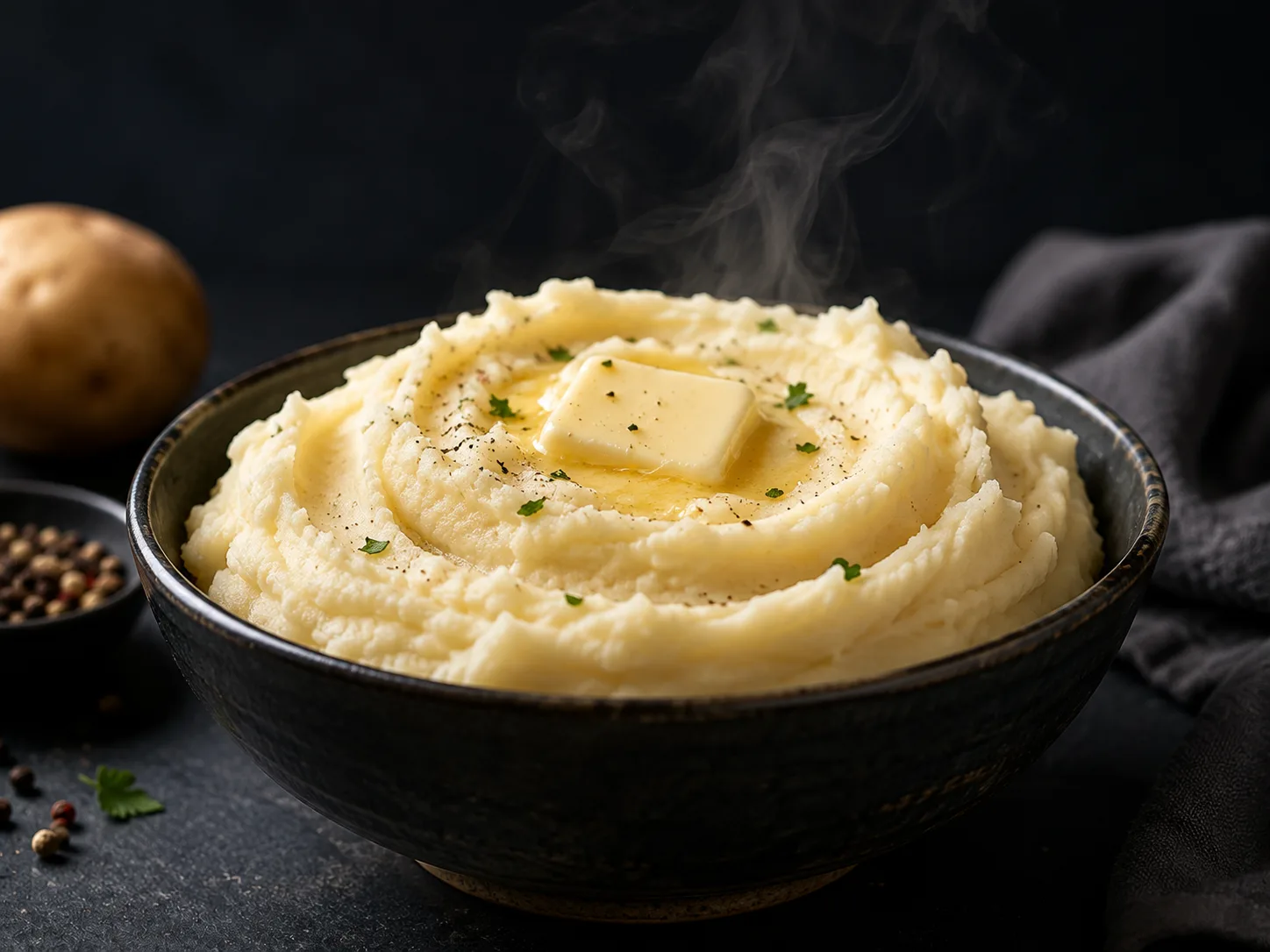
Granules reconstitute into a finer, more uniform mash texture with good water absorption, supporting retail and industrial instant potato products.

Used as a clean-label potato ingredient where even particle size helps consistent hydration, soft texture and mild potato flavour in dough systems.
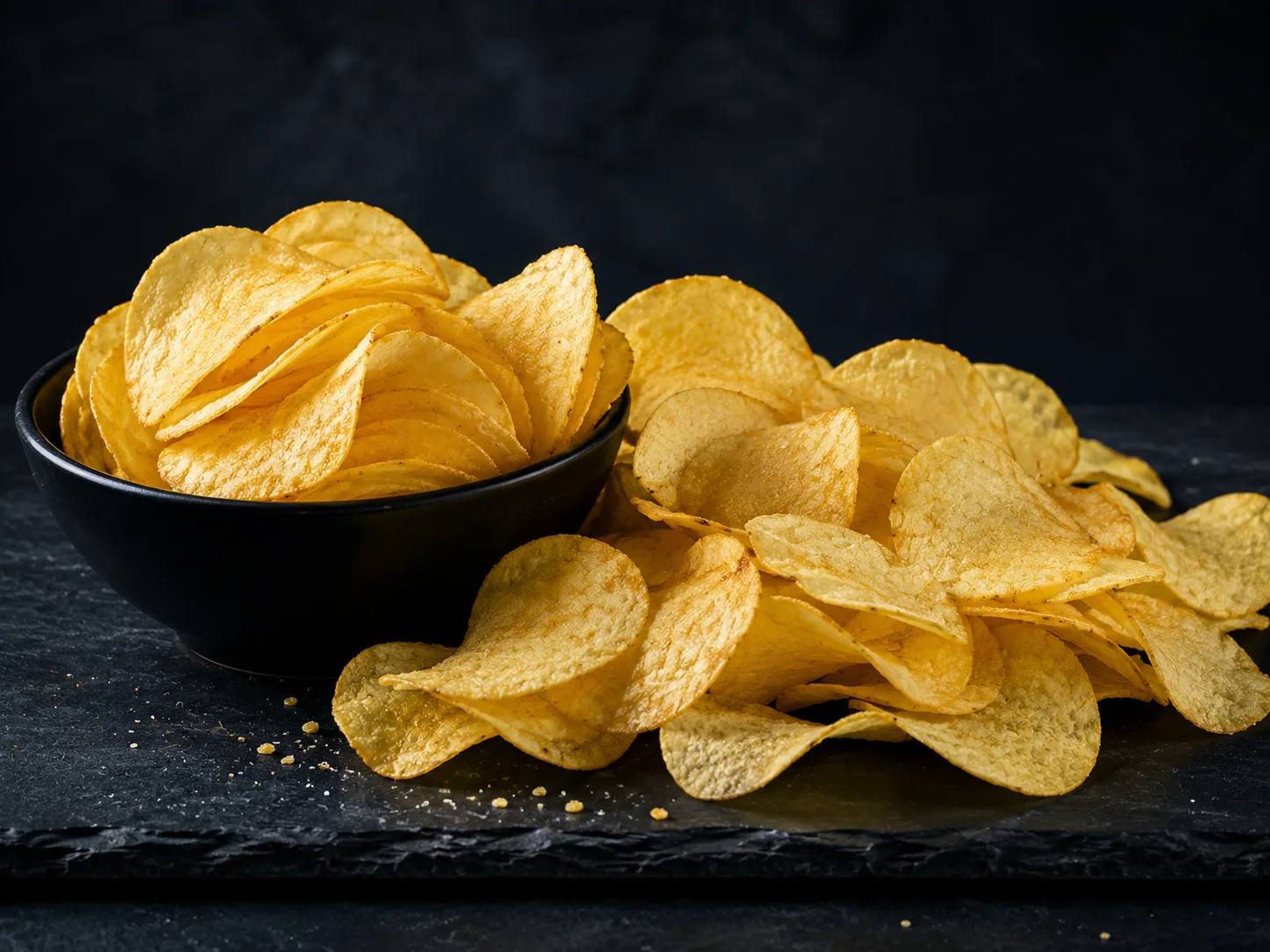
Contributes uniform potato solids and predictable hydration to formed and restructured snack lines that need consistent dosing.
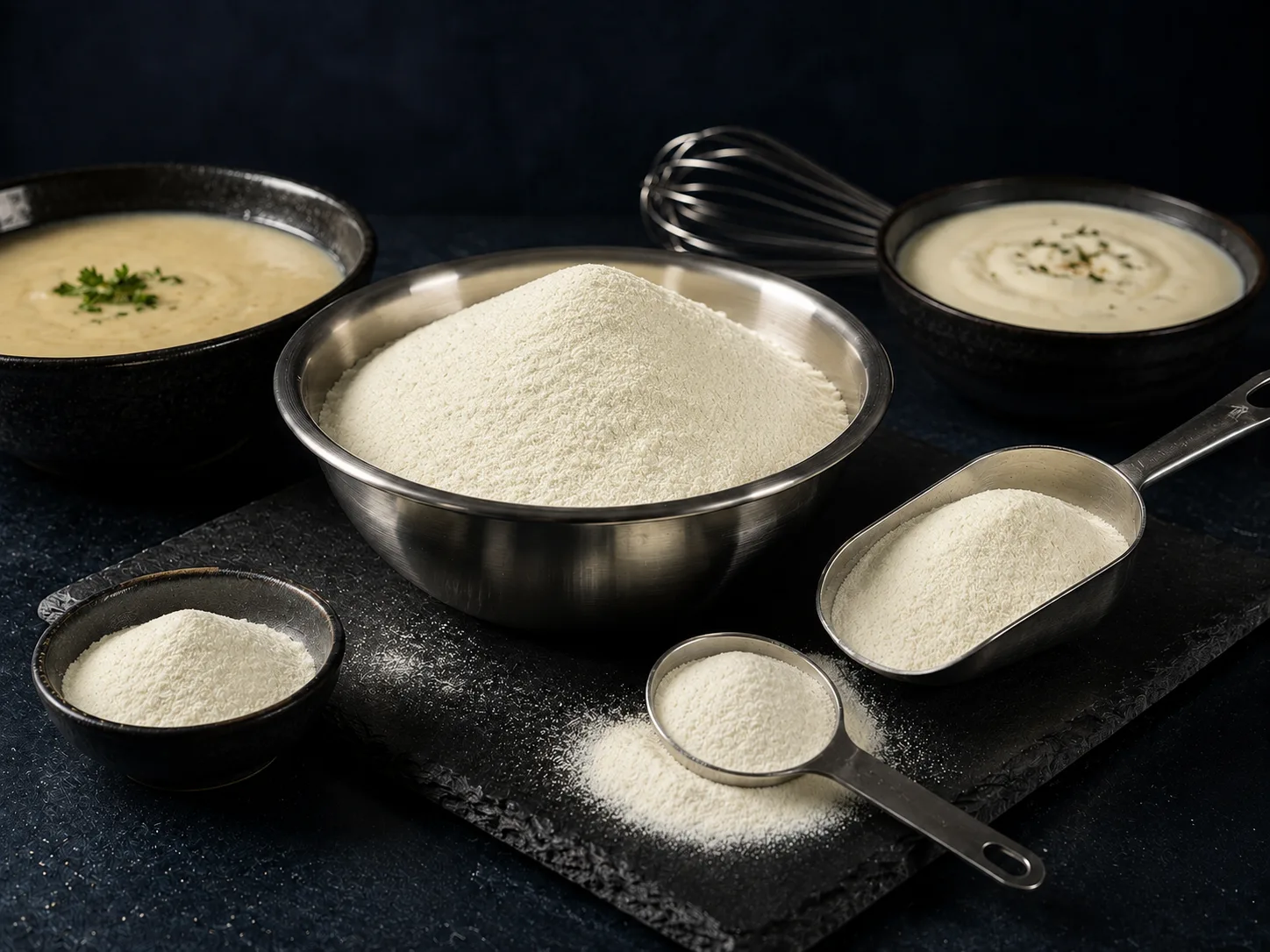
Free-flowing granules meter accurately into dry blends and rehydrate consistently in prepared-food and convenience applications.
Module 05 — Bulk Supply & Logistics
We manufacture and supply whole potato granules for global food processors, instant-food producers, bakery plants and OEM formulation partners.
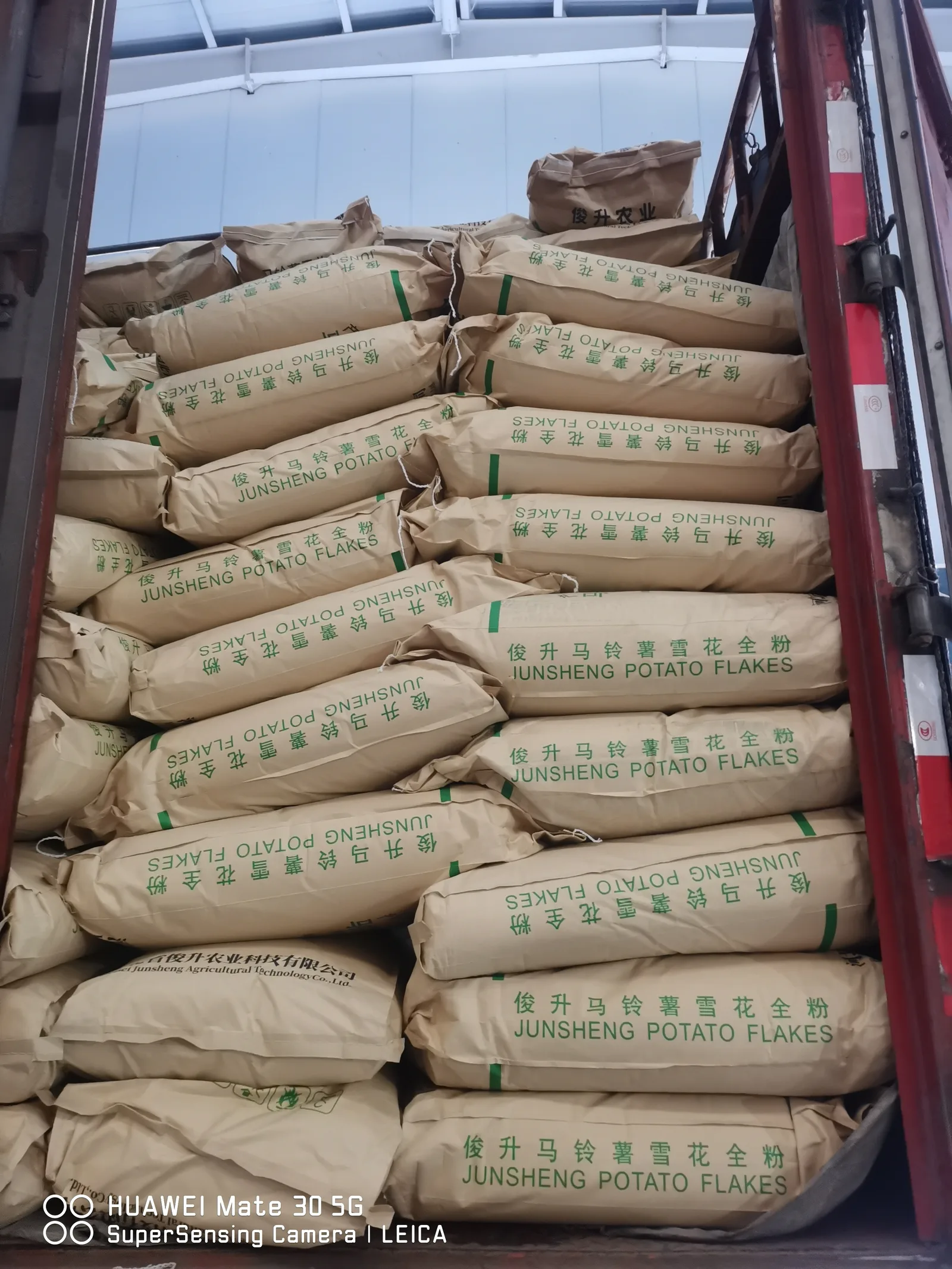
Supplied in 25kg multi-wall kraft paper bags with food-grade inner liners. Jumbo bag and customized packaging options can be discussed for large industrial users.
Batch control focuses on moisture, granule size, free starch, bulk density, rehydration and finished texture.
FCL shipments can be accompanied by COA, packing list, commercial invoice, bill of lading and relevant export documents.
Module 06 — B2B Technical FAQ
Answers for R&D teams, procurement managers, food technologists and distributors evaluating whole potato granules.
Whole potato granules are produced as uniform, free-flowing particles that reconstitute into a finer, smoother mash, while potato flakes keep a broader, more open flake structure with a looser mouthfeel. The practical difference shows up in free starch, bulk density, rehydration behaviour and finished texture: granules typically hydrate with less pastiness and dose more precisely in dry-blend lines. Potato granules are generally a better fit for instant mashed potato, formed snacks, bakery doughs and dry mixes where uniform texture and dosing accuracy matter, and we can run a side-by-side trial against flakes with your own recipe, water ratio and mixer before you approve any kilogram-for-kilogram replacement.
In the add-back process, cooked and riced potato mash is mixed back with dry granules and conditioned so moisture redistributes gently without crushing the potato cells, then the mix is dried and sieved. Because most cells stay intact, less starch leaks out during processing, which keeps free starch low and prevents the pasty, gluey texture you can get from heavily damaged cells. The result is a free-flowing granule with predictable rehydration and a fine, uniform mouthfeel — this is exactly the cell-protection logic we apply as a potato granules manufacturer China when matching whole potato granules to your line. Ask for the sieve distribution, free starch and bulk density values on the COA and verify them in your own rehydration test.
Start with a water-to-granule ratio around 4:1 to 5:1 (adjust for your target solids), use hot water at roughly 70–85 °C, and add the granules gradually into moving water while stirring gently — rapid addition or intense shear after hydration begins is the main cause of lumps and a pasty texture. Let the mash rest for a short time before final mixing, and keep the addition order, mixing speed and holding temperature consistent batch to batch because salt, fat and seasoning all shift hydration behaviour. For potato granules for instant mashed potato and other rehydration-sensitive products, we can tailor particle size so the granule hydrates evenly with low free starch and no sticky lumps, and our technical team can help you set up a simple in-plant rehydration protocol.
These reference values follow the USDA A-A-20032H basis for dehydrated white potatoes: moisture ≤9.5% protects shelf stability and flow, reducing sugar ≤4.0% keeps fry or bake colour predictable, and sulphite as SO₂ at ≤600 mg/kg is a reference ceiling that may be tightened to the EU 400 mg/kg maximum for dehydrated potato products under Regulation (EC) No 1333/2008 when your destination market requires it. Yeast and mould below 100 CFU/g is a food-grade microbial guardrail, and every shipment carries a batch COA showing the actual tested values for these fields. When you compare potato-granule quotations, ask for the COA of the last three batches and confirm that moisture, reducing sugar, SO₂ and the microbiological profile are all measured against the same methods and units.
Potato granules for instant mashed potato are the classic use because the fine, uniform particles rehydrate into a smooth, consistent mash with good water absorption and no coarse flakes. In bakery systems the even particle size helps consistent hydration, soft crumb and clean-label potato flavour; in formed and restructured snacks it supplies uniform potato solids with predictable water uptake; and in dry mixes the free-flowing granules dose accurately by volume or weight. Bulk density matters in every one of these lines because it drives bag fill, volumetric dosing and final solids, so we report loose and tapped bulk density per batch and can adjust granule size for your application.
As a direct manufacturer and exporter, our standard MOQ is a full container load — FCL in a 20ft or 40ft container — which gives you the best unit price and stable lot control, and we can discuss a trial container or LCL arrangement for your first evaluation. Before production we confirm the packaging (25 kg kraft bags with food-grade liners, or jumbo bags), pallet configuration, label language and destination port, then we lock the specification and MOQ into the contract. Shipments are loaded under our export documentation, and the exporter files the packing list, commercial invoice and bill of lading so your customs clearance and market entry run smoothly.
Every shipment is accompanied by a batch COA that reports the actual tested values for moisture, reducing sugar, SO₂, yeast and mould, granule size and bulk density, plus a TDS with the full specification, packing list, commercial invoice, bill of lading and certificate of origin where required. We can also arrange additional documents for your market — for example HALAL certification, allergen statements or a letter confirming the EU 1333/2008 sulphite limit — after we confirm your destination requirements. Ask for the COA before production as well as after, and keep the samples from each batch so your QA can compare the delivered whole potato granules against the approved reference.
Send us a sample request through the inquiry form or email with your finished product, application, target granule size and rehydration behaviour, trial volume and destination port, and we will prepare a sample pack with the corresponding TDS and COA for your lab or pilot line. Samples ship free of charge for application testing, and our technical team can join a call to review your water ratio, temperature, mixing and equipment so the trial conditions match your plant. After your test we confirm MOQ, FCL pricing and lead time, and if you need adjustments in granule size, bulk density or rehydration we can build them into a custom specification before production.
Sample packs for application testing · COA available · R&D specification discussion supported.
Start a whole potato granules inquiry
Share your application, trial volume and destination port — our technical team will prepare specs, MOQ and pricing.
PRODUCT APPROVAL · SPECIFICATION & APPLICATION
Use this section to verify whether the product form matches your formulation and line conditions. Focus on measurable properties such as hydration, particle size, bulk density, reducing sugars where relevant, colour and microbiological requirements.
Before approval, compare the sample with the current TDS and lot COA, then record the agreed limits in the purchase specification. Packing, MOQ and delivery terms can be confirmed after the technical fit is established.
Check the product against the finished product, dosage and process.
Review the measurable attributes used in sample and quality approval.
Link the approved grade to documents, packing and commercial supply.