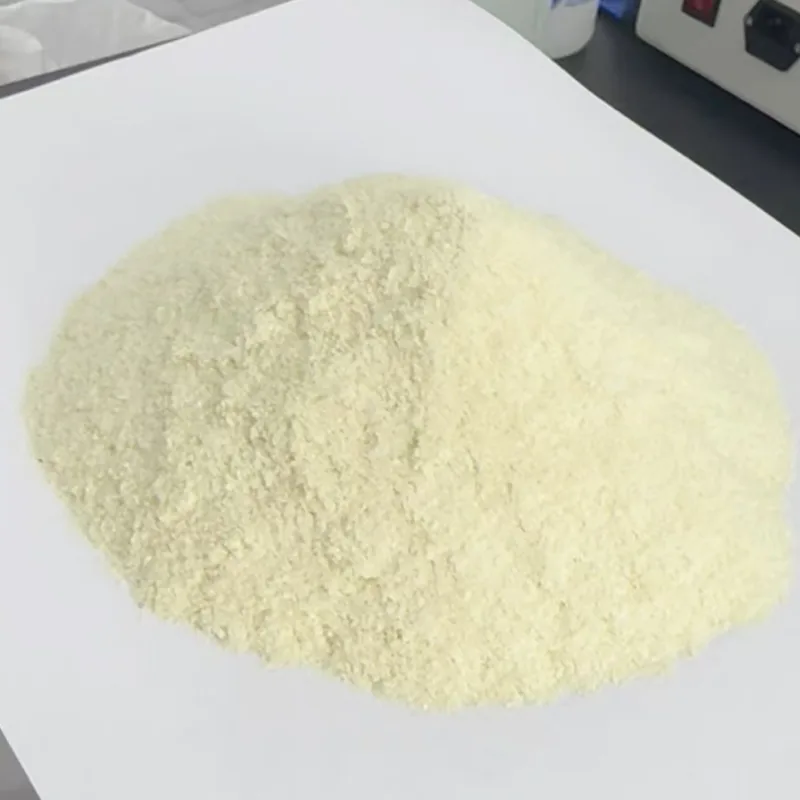
Food Grade Potato Granules supplied factory-direct for food manufacturers, importers and ingredient distributors looking for food-grade potato ingredients, bulk potato flour supply and stable industrial processing performance. Buyers can compare application suitability, particle size or mesh, hydration or water-absorption behaviour, colour, flavour and other agreed technical parameters before confirming a trial. Request a product sample, TDS, batch COA, MOQ, 25 kg export packing, container-loading plan and FOB or CIF bulk quotation for your destination market.
✓ Technical specification✓ Lot COA✓ Export support
Raw-material selection and process control focus on the functional requirements of food grade potato granules. Moisture, size or particle distribution, colour, rehydration or viscosity, microbiological limits and packing must be written into the agreed specification and verified by the lot COA.
Applications and line trials
Suitable for food manufacturers requiring repeatable lots, continuity of supply and export documentation. Test a laboratory sample first, then validate dosage, texture, colour and finished-product flavour under actual production conditions.
Industrial food processingFoodservice and prepared foodsIngredient distributionBulk export procurement
Packing, MOQ and export delivery
Bag weight, liner, pallet pattern, label language and shelf-life declaration are confirmed by destination requirements. Include volume, destination port, pallet preference and document requirements in the RFQ for a workable MOQ, loading plan and lead time.
Information buyers should confirm
Final application, process conditions and target dosage
Test methods for moisture, size, rehydration or viscosity
Microbiological, contaminant and destination-market requirements
Trial volume, annual demand, packing, port and delivery schedule
PROCUREMENT FAQ
Answers before your first order
How are dehydrated potato granules different from potato flakes?
Granules are manufactured to form a finer, more uniform particulate structure after rehydration, while flakes generally retain a broader flake structure and often deliver a more open mashed-potato texture. Compare water ratio, rehydration time, free starch, fines, bulk density and finished mouthfeel. A kilogram-for-kilogram replacement can change water demand, yield and mixer load, so approve the conversion only after a controlled side-by-side trial.
Which granule-size and fines limits should be written into the purchase specification?
Specify the full sieve distribution rather than one nominal mesh: oversize, retained fractions and pan fines. Excess fines can hydrate too quickly, create dust or sticky lumps; excessive coarse particles may hydrate slowly and remain perceptible. Also define loose bulk density, moisture and the sieve method because these affect bag fill, volumetric dosing and consistency.
How can I reconstitute potato granules without lumps or a pasty texture?
Control water quality, temperature and ratio; distribute granules gradually into moving water and avoid intense shear after hydration begins. Record addition order, mixing speed, rest time and final holding temperature. Optimise with the intended salt, fat and seasoning system because electrolytes and solids alter hydration. Use the approved sample as a texture reference during scale-up.
What information should I send before requesting a price for Food Grade Potato Granules?
Please state your finished product, target function, current benchmark, process conditions, trial quantity, estimated annual demand, destination country and port. Add the required bag weight, pallet preference, label language, TDS, COA, HALAL or other approval documents. This allows the supplier to recommend a realistic grade and quote MOQ, FOB/CIF basis, lead time and container loading instead of giving an unusable headline price.
How should I evaluate a sample before placing a bulk order?
Use a written trial protocol and test the sample against your current approved material. Record sample lot, dosage, water ratio, water temperature, addition order, mixing speed, rest time, cooking or extrusion conditions, yield, texture, colour, flavour and process losses. Keep a retained sample and scale from laboratory to pilot and production trials; do not approve a full container only from appearance or a single beaker test.
Which technical specification and COA items should I confirm?
The signed specification should identify test method, unit and limit for critical items such as appearance, moisture, particle profile, bulk density, hydration or viscosity, colour, flavour, microbiological limits and relevant contaminants. The lot COA should show the actual batch results for the agreed release tests, not simply repeat specification limits. Buyers should also confirm product name, grade code, lot number, production date, shelf life and document version.
How can I control batch-to-batch consistency after supplier approval?
Approve a target specification together with a retained reference sample and application test. Compare incoming lots using the same methods and trend critical data rather than judging each COA in isolation; include moisture, colour, particle distribution, hydration, viscosity and sensory performance where relevant. If a result drifts, quarantine the lot, share photos and trial records, and complete a documented root-cause and corrective-action review before release.
How are MOQ, bulk price, Incoterm and lead time confirmed?
MOQ and price depend on grade, customization, bag and pallet format, order frequency, destination, documents and whether the shipment is LCL, 20-foot or 40-foot FCL. Ask the quotation to state currency, validity, net weight, Incoterm such as FOB or CIF, loading quantity, production lead time, payment terms and what freight or customs costs are included. Trial orders of 1–5 MT may require a separate packing and logistics assessment from regular container supply.
What packaging, storage and shelf-life controls are important?
Confirm bag construction, food-grade inner liner, net weight, heat sealing, pallet protection, label information and container moisture control. Store sealed product in a cool, dry, clean and odour-free warehouse away from walls, floor moisture, heat, pests and chemicals; use FIFO or FEFO according to the declared shelf life. Once opened, reseal the liner and record the opening date because dehydrated potato ingredients can absorb humidity and odours.
Which food-safety certificates and export documents should an overseas buyer request?
Request current copies of the supplier’s applicable food-safety certification, such as FSSC 22000, and HALAL certification when required by the market or customer. Verify the legal entity, manufacturing site, product scope, certificate number, issuer and expiry date rather than relying on a logo. Shipment documents may include commercial invoice, packing list, bill of lading, certificate of origin, health or sanitary documents and lot COA, subject to destination and contract.
What should I do if a delivered lot does not meet the approved requirement?
Segregate the goods and avoid using or reworking them until the impact is assessed. Send the supplier the lot number, quantity affected, photos, seal and packaging condition, COA, storage record, sampling method, test report and application-trial evidence. Agree on re-test rules, third-party laboratory use, disposition and corrective action in writing; traceability should connect raw material, production, packing and shipment records.
Use this section to verify whether the product form matches your formulation and line conditions. Focus on measurable properties such as hydration, particle size, bulk density, reducing sugars where relevant, colour and microbiological requirements.
Before approval, compare the sample with the current TDS and lot COA, then record the agreed limits in the purchase specification. Packing, MOQ and delivery terms can be confirmed after the technical fit is established.
01
Application fit
Check the product against the finished product, dosage and process.
food-grade specification
whole potato flour
bulk supply planning
supply continuity
02
Specification review
Review the measurable attributes used in sample and quality approval.
food manufacturing supply
potato flour applications
sample evaluation
batch COA
03
Approval & supply
Link the approved grade to documents, packing and commercial supply.